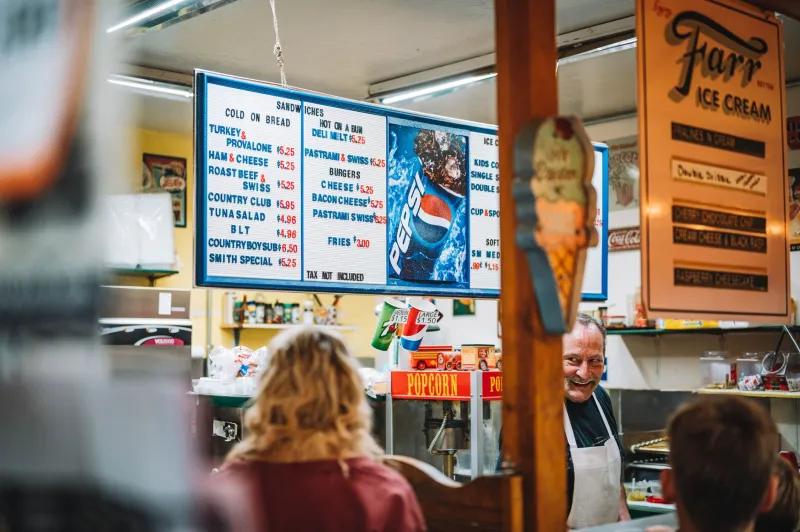
Your Sandwich Order Is Ready — and So Is Someone Who's Actually Happy to See You
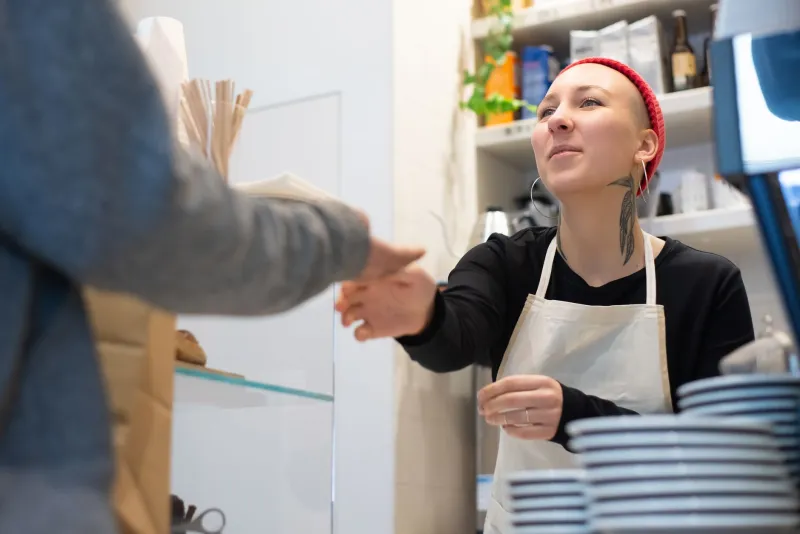
It's 12:15 on a Tuesday. You walk through the door and before you've even reached the counter, someone calls out your name. Not in a scripted, corporate-greeting kind of way — in the way a neighbor does when they actually notice you. Your usual is already being pulled together. Someone asks how your weekend went. You answer. They listen.
You leave with a sandwich and, without quite realizing it, a little lighter than when you walked in.
This is the quiet magic of the neighborhood deli. And it turns out, there's some real science behind why it feels so good.
The "Third Place" You Didn't Know You Needed
Sociologist Ray Oldenburg coined the term "third place" back in the 1980s to describe the informal social environments that exist outside of home (first place) and work (second place). Think barbershops, coffee shops, corner bars. Places where you show up as yourself, where hierarchy dissolves, and where the conversation flows without agenda.
The neighborhood deli fits that definition almost perfectly — and in a lot of ways, it's more accessible than the alternatives. You don't need to buy a $7 latte to justify your presence. You're already there for lunch. The transaction is built in, which takes the social pressure off entirely. You're not "hanging out" — you're just grabbing a sandwich. And yet, something real keeps happening in that space.
Mental health researchers have spent years documenting what they call "weak ties" — the low-stakes relationships we have with acquaintances rather than close friends. A 2021 study published in Nature Communications found that these casual, everyday interactions contribute meaningfully to feelings of happiness and belonging. The barista who remembers your order. The mail carrier who waves. The deli counter regular who always has a joke ready.
Weak ties, it turns out, aren't weak at all.
"She Just Gets It"
Ask any long-time deli regular about their favorite counter person and you'll hear a version of the same story. There's a warmth, a familiarity, that builds over dozens of ordinary visits until it becomes something you actually count on.
Take Marcus, a freelance graphic designer who lives alone in a mid-sized Midwestern city. He started stopping into his local deli two years ago mostly out of convenience. Now, he considers it a non-negotiable part of his week.
"I work from home, so I can go entire days without really talking to anyone," he says. "But when I come in here, Sandra knows I like my turkey on rye with extra mustard, she knows I hate cilantro, and she always asks about whatever project I mentioned the last time. It sounds small, but it genuinely helps. I leave feeling like a person again."
Sandra, who's worked the counter at a neighborhood deli for eleven years, says she hears this kind of thing more than people might expect. "You can tell when someone really needed to talk," she says. "Sometimes people come in stressed, or sad, or just kind of blank. And by the time they leave, they're smiling. I don't think it's the sandwich doing all the work."
She laughs, but she means it.
Why Familiarity Feels Like Medicine
There's a neurological reason why being recognized by name — by someone who isn't obligated to know you — feels genuinely good. When we experience social recognition, our brains release oxytocin, sometimes called the "bonding hormone." It's the same chemical that floods your system when you hug someone you love. The dose is smaller at the deli counter, sure, but it's real.
And in an era when loneliness has been declared a public health epidemic by the U.S. Surgeon General — with rates of chronic loneliness affecting nearly half of American adults — even small doses matter. A lot.
The isolation that accelerated during the pandemic didn't simply evaporate when restrictions lifted. Many people restructured their lives around remote work, grocery delivery, and digital socializing. Convenience increased. Spontaneous human contact decreased. And somewhere in that tradeoff, a lot of people quietly lost the texture of their days.
The neighborhood deli, with its noise and its smells and its actual human beings behind the counter, offers something that no app can replicate: the experience of being a known person in a physical place.
The Counter as Community Anchor
Deli owners tend to understand this intuitively, even if they don't use the language of mental health to describe it.
"We're not therapists," says one deli owner who's run her shop in the same neighborhood for over two decades. "But we see people every day. We know when someone's going through something hard. We know when they're celebrating. We know when they just need five minutes of normal."
She describes a regular customer — a retired teacher who lost her husband a few years back — who started coming in every morning after he passed. "She'd get a coffee and a half sandwich and just... sit. Sometimes she'd chat, sometimes she wouldn't. But she kept showing up. And we kept being here. I think that mattered."
It did. The customer eventually told her as much.
This is the deli as community infrastructure. Not in a grand, civic sense — but in the quiet, daily sense of being a place where people belong. Where the stakes are low enough that you can just be yourself. Where someone is genuinely glad you came in.
Showing Up Is Enough
You don't have to be going through anything dramatic to benefit from this kind of connection. Most of us aren't in crisis — we're just navigating the low-grade static of modern life. The inbox that never empties. The commute. The ambient stress of keeping everything running.
Against that backdrop, a place where someone knows your order, asks a real question, and actually waits for your answer isn't a small thing. It's a reset. A reminder that you exist in the world beyond your screen and your to-do list.
So next time you walk through the door and someone behind the counter lights up a little when they see you — let yourself feel that. It's not nothing. It might actually be exactly what you needed.
We'll have your usual ready.