Why Your Regular Lunch Order Might Be the Best Part of Your Week
Somewhere between your 9 a.m. meeting and your afternoon inbox spiral, there's a good chance the best moment of your day happens at a deli counter. Not because the turkey on rye is transcendent (though it might be). But because the person handing it to you remembers your name, asks about your kid's soccer tournament, and doesn't need you to explain yourself.
That's not a small thing. That's actually kind of everything.
The Third Place Nobody Talks About Enough
Sociologists have a term for it: the "third place." Home is your first place. Work is your second. The third place is somewhere in between — a spot that belongs to neither obligation, where you show up by choice and leave feeling a little more like yourself. Coffeehouses, barbershops, and parks often get credited as America's great third places. But the neighborhood deli deserves a serious seat at that table.
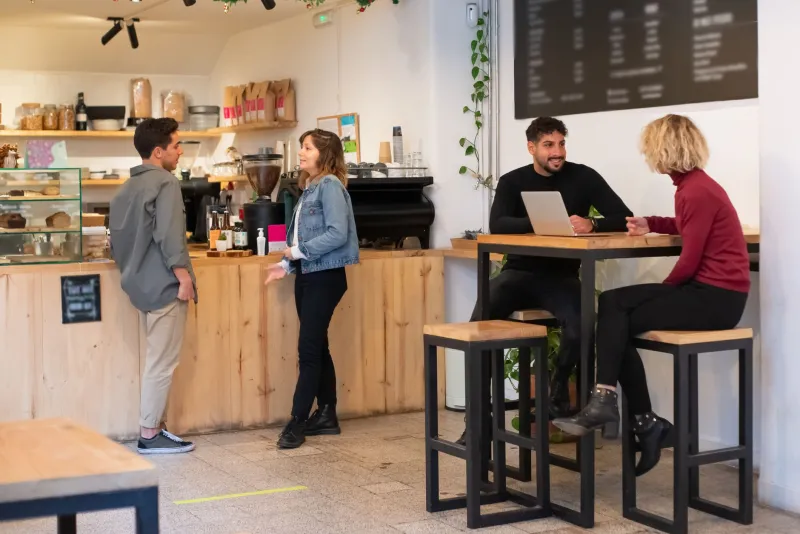
Think about what actually happens at a good deli counter on a Tuesday afternoon. A retired teacher catches up with the guy who owns the dry cleaner two doors down. A young nurse grabbing lunch between shifts gets a minute of genuine human conversation. A dad picking up a tray of cold cuts for the weekend gets asked how his mom is doing after her surgery. These aren't transactions. They're threads in a social fabric that most of us didn't realize we were depending on until it felt frayed.
The deli, at its best, is one of the last truly democratic gathering spaces in American life. You don't need to buy a drink to stay. You don't need a reservation. You just need to show up.
The Ritual Is the Point
There's real psychological weight to routine, and researchers have been documenting it for years. Predictable, positive rituals — especially ones that involve other people — help regulate stress, create a sense of belonging, and provide what psychologists call "continuity of self." In plain English: doing the same good thing on a regular schedule makes you feel more grounded.
For a lot of people, their deli visit is exactly that kind of ritual. Same counter, same order, same face behind the register. Wednesday is pastrami day. Friday means the chicken soup is fresh. You know what to expect, and that predictability is quietly comforting in a world that doesn't offer much of it.
It's worth noting that this kind of comfort isn't trivial or shallow. After a rough morning, walking into a place that feels genuinely familiar — where the smell of fresh bread and warm coffee hits you before you even reach the counter — can actually shift your nervous system in a real way. You exhale. Your shoulders drop. You're not performing for anyone. You're just a regular.
"How Are You?" — And Actually Meaning It
Here's something a therapist's waiting room rarely offers: someone who's genuinely happy to see you.
The relationships that form between deli staff and their regulars are a specific and undervalued kind of human connection. They're not deep in the way that friendships are deep. But they're consistent, warm, and low-stakes in the best possible sense. You don't owe each other anything beyond basic kindness, and yet over months and years, something real accumulates.
The counter person who remembers that you switched to mustard after your doctor's visit. The owner who sets aside a container of the macaroni salad you love because she knows you'll be in by noon on Thursdays. The teenager behind the register who's watched you come in stressed and come in happy and doesn't judge either version of you.
This is what community actually looks like in practice. Not a hashtag or a neighborhood Facebook group — a real person who notices you and is glad you came back.
When Life Gets Hard, the Deli Shows Up
Ask anyone who's gone through a difficult season — a job loss, a divorce, a death in the family — and many of them will tell you that the small rituals were the things that held them together. Getting dressed. Making coffee. Going to get lunch.
The deli fits into this in a specific way. It's a place where you can be seen without being scrutinized. You can say "I'm hanging in there" and the person across the counter will nod and mean it, and then hand you your sandwich, and somehow that's exactly enough. Nobody pushes. Nobody pries. But nobody ignores you, either.
There's also something quietly restorative about being fed. Not just eating — being fed. Someone made this. They sliced the meat and layered it carefully and wrapped it up. When you're in a hard stretch, that act of care, even from a stranger, lands differently than you'd expect.
What We Lose When We Lose the Local Deli
This is where things get a little more urgent. Neighborhood delis, like a lot of independent small businesses, are under real pressure. Chains expand. Delivery apps flatten the experience into a transaction with no face attached. People get busy and stop making the trip.
And when a local deli closes, the community loses more than a lunch option. It loses a gathering point. It loses the place where a certain kind of casual, cross-demographic human contact was happening every single day. Those interactions — the brief ones, the easy ones — turn out to matter more than we tend to give them credit for.
Research on loneliness in America consistently shows that it's not just the absence of close relationships that does damage. It's the absence of what sociologists call "weak ties" — the acquaintances, the regulars, the neighbors you nod to. Weak ties are the connective tissue of a healthy community, and the deli counter is one of the last reliable places to find them.
Come In. Stay a Minute.
You don't have to overthink it. You don't need to walk into your local deli looking for community or emotional grounding or the psychological benefits of third-place theory. You can just go because you're hungry and the turkey club is really good.
But pay attention to what else happens. Notice whether someone knows your order. Notice whether you feel a little lighter on the way out than you did on the way in. Notice whether, somewhere between the pickle and the paper bag, you had a moment — small and ordinary and genuinely human — that the rest of your day didn't offer.
That's the deli doing what it's always done. Feeding the neighborhood. All of it.