Where Everybody Knows Your Order: The Neighborhood Deli as America's New Town Square
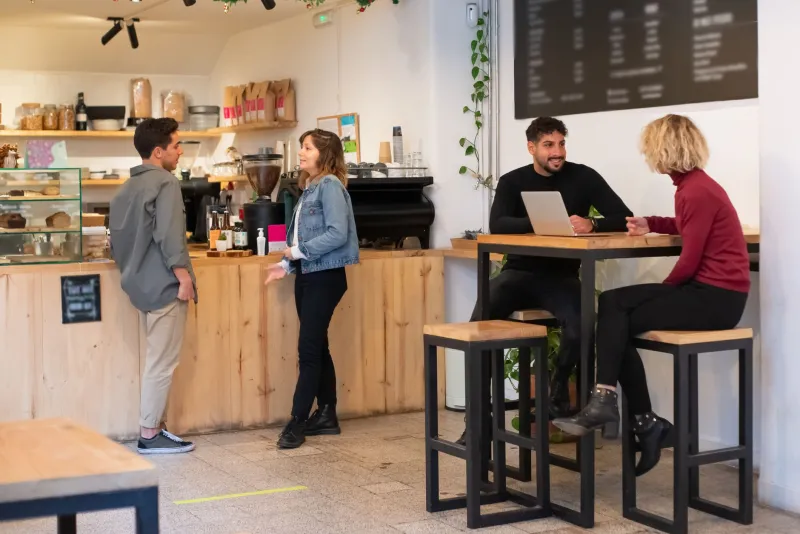
There's a moment that happens in certain delis — the kind that's been around long enough to have a hand-written menu taped over the laminated one — where you walk through the door and someone behind the counter just knows. Before you've said a word, they're reaching for the rye bread. They're asking whether you want the usual, or if today feels like a change.
That moment is worth more than most of us stop to realize.
In an era when loneliness has been declared a public health crisis by the U.S. Surgeon General, and when the average American reportedly has fewer close friends than at any point in recent recorded history, the neighborhood deli is doing something quietly extraordinary. It's becoming one of the last genuinely democratic social spaces left in American life — a place where nobody needs a reservation, an invitation, or a reason to show up beyond being a little hungry.
The Third Place We Forgot We Needed
Sociologist Ray Oldenburg coined the term "third place" back in the 1980s to describe the informal gathering spots that exist outside of home (the first place) and work (the second). Barbershops, diners, coffee shops, corner bars — spaces where community happens without an agenda. His concern, even then, was that American suburban design was slowly squeezing these places out.
Decades later, his worry looks prescient. Malls hollowed out. Chains replaced independents. The pandemic accelerated remote work, and suddenly millions of Americans lost even the office as a place to bump into someone and have an unplanned conversation.
What's survived, in neighborhood after neighborhood, is the deli.
"I don't think people come here just for the food," says one deli owner who has been running a counter operation in a mid-sized Midwestern city for over two decades. "They come because this is where they feel like they exist. Someone knows their name here. Someone asks about their kid's soccer game. That's not nothing. That's actually everything right now."
The Counter as Confession Booth
There's something about the physical architecture of a deli that lends itself to conversation. The counter is close. The line moves slowly enough to allow a sentence or two, but not so slowly that it becomes awkward. The noise level is friendly — lively without being overwhelming. You're not staring at a drive-through speaker. You're looking at a person.
Deli owners, almost universally, describe their role in terms that go well beyond food service. They are, by the nature of their work, informal therapists, neighborhood historians, and social connectors.
"I've had people come in after funerals. After divorces. After job losses," says a deli owner in the Northeast who took over the shop from her father. "They don't always want to talk about it. Sometimes they just want a hot pastrami and for someone to treat them normally. And I can do that. This place can do that."
Regulars often describe the same phenomenon from the other side of the counter. There's a comfort in being known, in having a place where your presence is recognized. It costs nothing extra. It requires no social media profile. You just have to show up.
When the Regulars Become the Community
One of the more remarkable things that happens in long-standing delis is the way the customer base begins to function as its own social network — offline, in real time, and completely organically.
Regulars start recognizing each other. The retired teacher who comes in every Tuesday at 10 a.m. nods hello to the contractor who stops in before his first job. The young mom with the stroller gets to know the older couple who sit by the window on Saturday mornings. Nobody planned this. Nobody scheduled it. It just happens, the way human beings naturally form bonds when they're placed in proximity and given a reason to relax.
"I've watched friendships start at that counter that have lasted years," says one shop owner. "Actual friendships. People who met while waiting for their sandwiches and ended up exchanging numbers. I've seen neighbors figure out they live two blocks apart after running into each other here for six months."
In some delis, this organic community-building has taken on more intentional forms. Bulletin boards covered in local flyers. A jar on the counter for a neighbor's medical fund. A chalkboard that lists the high school sports scores from the weekend. Small gestures, but ones that signal clearly: this place is part of something larger than lunch.
What the Digital World Can't Replicate
It would be easy — and a little too convenient — to frame the deli's social role as simply a reaction against technology. The reality is more nuanced. Many deli owners use Instagram to share daily specials and engage with their community online. Some have loyal followings built entirely through word-of-mouth and social media.
But there's broad agreement among owners and regulars alike that something happens in the physical space that no digital interaction can reproduce. The smell of fresh bread. The sound of the slicer. The warmth of a room full of people eating and talking. These are sensory, embodied experiences — the kind that register in the nervous system in ways that a notification simply cannot.
"You can have a thousand followers," one owner puts it plainly, "but if you're eating lunch alone in your car, you're still eating lunch alone in your car."
The deli offers an alternative. Not a cure-all, not a utopia, but a genuinely human space where showing up is enough.
Keeping the Door Open
For all the warmth they generate, neighborhood delis operate on thin margins and face real pressures — rising food costs, rent increases, competition from fast-casual chains that can undercut on price if not on soul. The owners who've kept their doors open for decades tend to share a common philosophy: the community is the business. Serve the neighborhood well, and the neighborhood will take care of you.
"I could probably make more money if I turned this into something trendier," admits one long-time owner. "But then it wouldn't be this place anymore. And this place matters to people. That's not something I'm willing to trade away."
In that stubbornness — that refusal to optimize away the thing that makes a deli a deli — there's something genuinely hopeful. The notebook behind the counter where someone's order gets written down. The extra pickle that appears without asking. The owner who remembers that you take your coffee light.
These are small acts. But in a world that increasingly struggles to make people feel seen, they're anything but small.