Thick, Thin, or Torn by Hand: How Your Deli Slices the Meat Makes All the Difference
Walk up to any deli counter and you'll hear a question that sounds simple but carries a whole lot of weight: "How do you want that sliced?"
Maybe you've always just said "regular" and moved on. But the folks behind the counter at your neighborhood deli will tell you — that choice matters more than most people realize. The way a protein is cut directly shapes how it feels in your mouth, how its flavor hits, and whether that sandwich holds together the way it should. It's one of those behind-the-scenes decisions that separates a forgettable lunch from one you actually think about on the drive home.
So let's get into it. Sliced, shaved, or hand-carved — what's the difference, and when does each method shine?
What "Sliced" Actually Means at the Counter
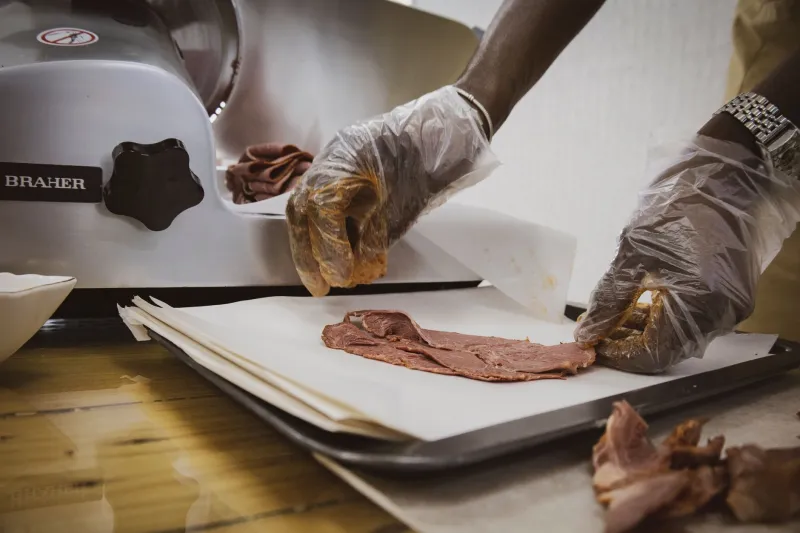
When most people picture deli meat, they're picturing machine-sliced cuts — the kind that come off a commercial slicer at a consistent, adjustable thickness. These machines, often called meat slicers or deli slicers, use a rotating circular blade to produce uniform pieces with a clean edge. It's the workhorse of the deli world, and for good reason.
The beauty of machine slicing is control. A skilled counter worker can dial in the thickness to match the protein and the sandwich style. A good sharp cheddar or a mild smoked ham might get cut at around 1/8 of an inch — thin enough to layer nicely, thick enough to have some presence. Denser, fattier meats like mortadella or head cheese often benefit from slightly thicker cuts that let the texture speak for itself.
Machine slicing also means consistency, which matters when you're making sandwiches for a crowd or running a catering order for fifty people. Every slice lands the same way, folds the same way, and eats the same way — and that reliability is genuinely valuable.
The tradeoff? Uniformity can sometimes work against you. Some proteins, especially those with a more rustic or irregular structure, lose a little of their character when forced through the same template every time.
The Case for Shaved Meat
Shaved meat is machine-sliced taken to its most extreme — cuts so thin they're practically translucent, almost feathery in texture. You'll most often see this technique applied to beef (think cheesesteak-style ribeye), prosciutto, or certain styles of turkey breast.
The reason to go this thin? It's all about mouthfeel and meltability. Paper-thin prosciutto practically dissolves on your tongue, letting the salt and fat bloom immediately. Shaved beef, when piled high on a hoagie roll, creates that silky, almost creamy texture that's made the Philly cheesesteak a national obsession. The meat doesn't sit in distinct layers — it weaves together into something almost unified.
Shaving also makes a smaller quantity of meat feel more generous. A quarter pound of shaved turkey mounded on a roll looks and feels like a much more substantial portion than the same weight cut thick. There's a visual and tactile abundance to it that's hard to replicate with thicker slices.
That said, shaved meat isn't right for everything. A hearty pastrami loses some of its satisfying chew when it's sliced too thin. The grain of the meat matters, the fat distribution matters, and not every protein responds well to this treatment. It takes a practiced eye to know when to go thin and when to back off.
Hand-Carving: Old-School for a Reason
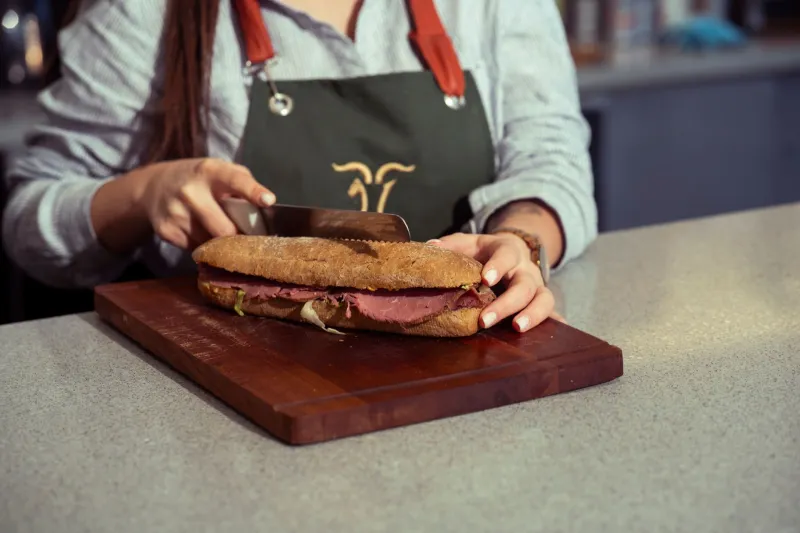
Then there's hand-carving — the method that requires the most skill, the most time, and arguably produces the most rewarding results for the right proteins.
Hand-carving typically comes into play with whole roasted meats: a full leg of lamb, a bone-in turkey breast, a slow-roasted beef round, or a glazed holiday ham. A sharp carving knife in experienced hands can navigate around bones, follow the natural grain of the muscle, and produce slices with an irregular, organic quality that a machine simply can't replicate.
Those irregular edges aren't a flaw — they're a feature. The slightly jagged surface of a hand-carved slice catches sauces, mustards, and condiments in a way that smooth machine-cut meat doesn't. The texture within each slice can vary, giving you a mix of crispier outer bits and more tender interior pieces all at once. It's more complex, more interesting, and frankly more fun to eat.
For catering spreads and holiday setups, a whole roast being carved tableside is also just a moment — it signals care and craftsmanship in a way that a tray of pre-sliced meat can't quite match. There's a reason carving stations have been a staple of American holiday gatherings for generations.
The downside is obvious: it's slower, it requires real skill, and it's harder to maintain consistency across a large volume of orders. It's not practical for every situation, but when the occasion calls for it, nothing else compares.
So Which Method Wins?
Here's the honest answer: there's no universal champion. The right technique depends entirely on what you're working with and what you're going for.
Shaved is your go-to for ribeye, prosciutto di Parma, and any situation where you want that pillowy, melt-together texture. It's the right call when the fat content is high and the protein benefits from maximum surface area contact with heat or condiments.
Machine-sliced at medium thickness is the reliable everyday hero — perfect for turkey, ham, corned beef, roast beef, salami, and most of the deli classics you grew up with. It's consistent, versatile, and gets the job done beautifully.
Hand-carved is reserved for the moments that deserve it: whole roasted proteins, special occasions, or any time you want the experience of eating to feel a little more intentional. It rewards the proteins that have been cooked low and slow with real depth of flavor.
What to Ask for Next Time You're at the Counter
The next time you're standing at the deli case, don't just default to whatever the person in front of you ordered. Think about what you're building. If you're making a classic club sandwich, medium-sliced turkey gives you the structure you need. If you're doing a hot cheesesteak at home, ask for shaved beef. If you're putting together a holiday spread for a houseful of guests, ask whether the deli has any whole-roasted options you can have carved fresh.
The people behind the counter at your neighborhood deli have strong opinions about this stuff — and they're usually happy to share them. A good deli counter worker has spent years developing a feel for how each protein behaves, how the grain runs, and which cut will make your sandwich something worth talking about.
That knowledge is part of what makes your local deli more than just a place to grab lunch. It's a neighborhood resource, staffed by people who genuinely care about getting it right. Don't be shy about tapping into it.
Because the difference between a good sandwich and a great one is often measured in millimeters.