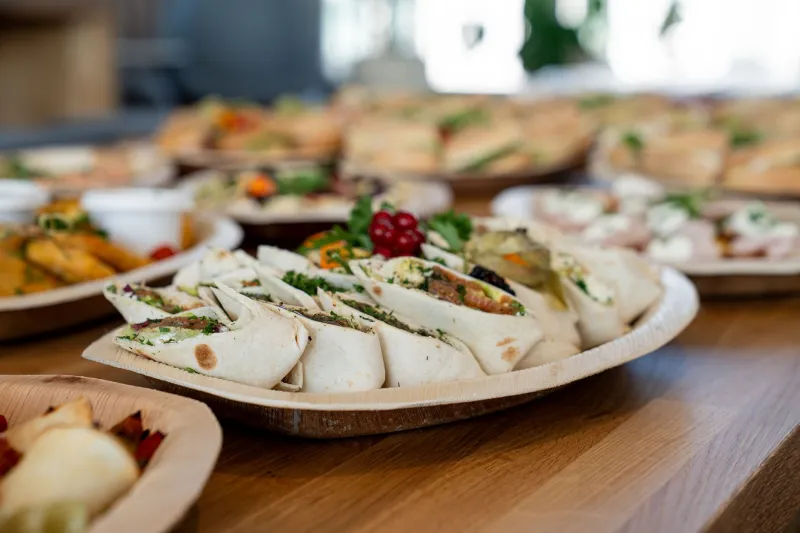
Behind the Counter: The Secrets That Make a Deli Sandwich Truly Unforgettable
There's a moment — you've probably had it — where a sandwich is so good that conversation stops. Forks get set down. Eyes close. Someone at the table says, "okay, what is in this?" At Towne Deli, that reaction is kind of the whole point.
But what actually separates a sandwich that earns that response from one that's just... fine? We spent some time with the folks behind our counter to break it all down — the sourcing decisions, the layering logic, the bread philosophy — and we're sharing it all here, including tips you can actually use at home.
It Starts Way Before the Bread
Before a single slice of turkey hits a cutting board, the work of a great deli sandwich has already begun. It starts with relationships — specifically, the ones built with local suppliers, farmers, and producers who care as much about quality as we do.
At Towne Deli, we prioritize sourcing from regional vendors whenever the seasons allow. That means roast beef that comes from cattle raised not too far from here, produce pulled from nearby farms, and cheeses that often come from small American creameries doing things the slow, traditional way. Is it more work than ordering from a big distributor? Sure. But the difference shows up in every bite.
"When the ingredients are good — really good — you don't have to work as hard to make something special," says one of our longtime sandwich makers. "The food kind of does the talking for you."
That philosophy drives every menu decision we make. We're not trying to mask mediocre ingredients with fancy sauces. We want the turkey to taste like turkey. The tomatoes to taste like summer.
The Bread Question (It's More Important Than You Think)
Ask any serious deli person what the most underrated element of a sandwich is, and nine times out of ten, they'll say bread. Not the protein. Not the cheese. The bread.
Here's why: bread isn't just a delivery vehicle. It sets the tone for the entire eating experience. A soft, pillowy sub roll invites you to relax into a sandwich. A crusty sourdough creates a little resistance — a satisfying chew that makes each bite feel earned. Rye bread brings its own earthy, slightly tangy character that pairs beautifully with cured meats and sharp mustards.
At Towne Deli, we match bread to filling the way a sommelier matches wine to food. Our pastrami lives on rye — full stop. A turkey club gets a toasted sourdough or a sturdy wheat. Our Italian-style subs go on a sesame roll with just enough structure to hold up against oil and vinegar without turning soggy.
"The biggest mistake people make at home is using whatever bread is in the pantry," says our head sandwich maker. "Go get the right bread. It changes everything."
If you're building a sandwich at home, take the extra ten minutes to visit a local bakery or the bakery section of a good grocery store. Day-old bread from a quality source will almost always beat fresh bread from a lesser one.
Layering: There's Actually a Right Order
Here's something most people don't know: the order in which you layer a sandwich matters. A lot.
Moisture management is the name of the game. If you put wet ingredients — tomatoes, pickles, anything dressed in a sauce — directly against the bread, you're going to end up with a soggy situation before you even finish wrapping it up. The fix is simple: use your denser, drier ingredients as a barrier.
At Towne Deli, our standard layering approach goes something like this:
- Spread condiments directly on the bread — this creates a moisture-resistant layer and adds flavor right where your tongue hits first.
- Layer cheese next to the bread on at least one side — cheese acts as a buffer and also picks up flavor from the condiments.
- Stack your proteins in the center — fold deli meat rather than laying it flat. Folded meat creates air pockets that make the sandwich feel more substantial and easier to bite through.
- Add vegetables and pickles last, toward the middle of the stack — this keeps them from making direct contact with the bread for as long as possible.
One more tip from our counter crew: don't be shy with seasoning. A pinch of flaky salt on a sliced tomato, a crack of black pepper on turkey — these small touches amplify everything around them.
The Ratio Problem (And How to Solve It)
Even the best ingredients fall flat if the ratios are off. Too much bread and you're eating a carb with sandwich-flavored air. Too much meat and the whole thing becomes overwhelming, almost aggressive. The goal is balance — every component should be present in every bite.
A rough guideline our team swears by: for every inch of bread height, you want about the same inch of filling. So a sandwich on a two-inch-thick roll needs two full inches of layered ingredients to feel right. It sounds overly precise, but once you start thinking about it, you'll notice immediately when something is off.
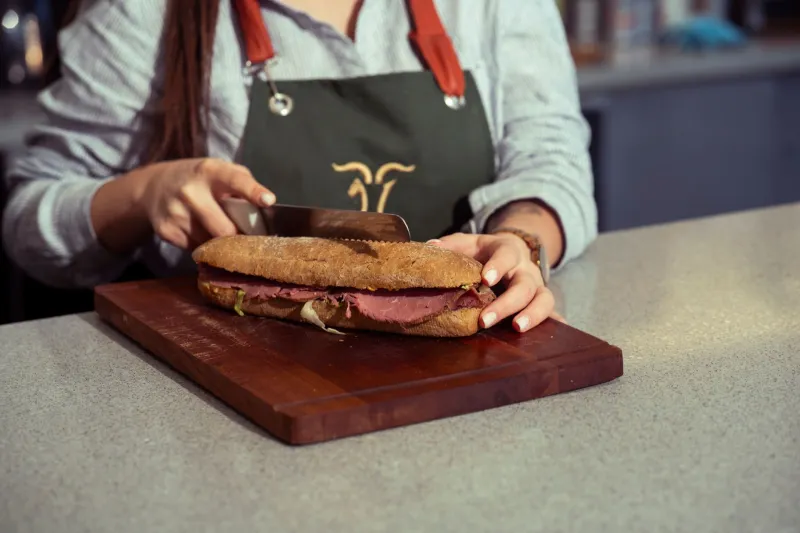
This is also why we cut sandwiches at an angle. It's not just aesthetics — a diagonal cut gives you a better cross-section view of everything inside, and it actually makes the first bite easier to manage.
Bringing Deli Quality Home
You don't need a professional setup to make a genuinely great sandwich at home. You need a few good ingredients, a little patience, and the willingness to think about each component before you start stacking.
Here's a quick checklist to take with you:
- Choose your bread intentionally. Match the density and flavor to your filling.
- Source the best protein you can find. Fresh-sliced from a deli counter will always beat pre-packaged.
- Season as you go. Salt your tomatoes. Pepper your meat. Dress your greens lightly.
- Layer strategically. Condiments on bread, cheese as a buffer, wet ingredients in the middle.
- Respect the ratio. Filling should match bread in volume.
- Let it rest. Wrap your sandwich and let it sit for five minutes before cutting. The flavors meld. It's worth the wait.
Of course, if you'd rather just let us handle it — that's what we're here for. At Towne Deli, every sandwich that leaves our counter is built with the same care and attention we've been putting into this craft for years. Stop by and taste the difference. We think you'll notice.